





Subscribe:
Award-Winning Microsuction Ear Wax Removal in Leicester
If you’re looking for the highest standards of microsuction ear wax removal in Leicester, our private ear clinic provides specialist care from Mr Neel Raithatha, an award-winning Consultant Audiologist, HCPC Registered Hearing Aid Dispenser and internationally recognised ear wax removal specialist. All ear wax removal procedures are carried out using advanced endoscopic (E-suction®) techniques for maximum safety, comfort and precision.
As featured on national and international media













Mr Raithatha pioneered endoscopic microsuction ear wax removal in the UK and regularly treats complex and difficult cases, including children, often referred by GPs and other specialists. Patients travel from across Leicestershire, the UK and overseas to his Leicester clinic due to his unique level of expertise. As a result, Mr Raithatha and The Hear Clinic have been featured on UK and international TV and press for his specialist endoscopic microsuction ear wax removal.
As Seen on National Television
Mr Neel Raithatha discusses ear wax removal safety and NHS provision on BBC News, highlighting advanced endoscopic microsuction at The Hear Clinic in Leicester.
Live endoscopic microsuction ear wax removal performed by Mr Neel Raithatha on Channel 4’s Steph’s Packed Lunch, demonstrating water-free, high-definition vision.
Known internationally as the “The Wax Whisperer” online, Mr Neel Raithatha is the developer of the iCLEARscope® and WAXscope®, specialist high-definition camera systems used to visualise the ear canal in exceptional detail when removing ear wax. He also runs two specialist educational YouTube channels demonstrating real ear wax removal procedure using both the iCLEARscope® and WAXscope®, which together have over 600,000 subscribers and more than 500 million views worldwide. These channels are widely used by both the public and healthcare professionals for education and better understanding of the ear, ear wax removal, ear health and hearing loss.
Arrange Your Endoscopic Ear Wax Removal Appointment Today:
- The Hear Clinic, Stoughton Grange Rural Centre, Gartree Road, Oadby, Leicester, LE2 2FB
Appointments are usually available for same-day specialist ear wax removal at our private clinic in Oadby, Leicester. All procedures are performed personally by our Consultant Audiologist Mr Neel Raithatha using advanced endoscopic microsuction. No water, no syringing, and no ear drops required (unless specified on the phone when booking). You can also contact us via our online contact form.
International Patient Testimonial
International USA patient testimonial after travelling to The Hear Clinic, Leicester for endoscopic ear wax removal. View more patient testimonials and read our Google reviews.
Our Leicester Clinic Location
The Hear Clinic is located in Oadby, Leicester (LE2) in an idyllic Grade II listed building with free on-site parking, including disabled parking spaces. Our clinic is easily accessible from Leicester city centre, Wigston, Evington, Great Glen, Clarendon Park, Stoneygate and surrounding Leicestershire areas, including Market Harborough.
Why Choose The Hear Clinic in Leicester?
Water-free ear wax removal
Superior endoscopic technique
Magnified HD view of earwax
Performed by Mr Neel Raithatha
Suitable for children aged 2+
One visit, no ear drops required
Mr Neel Raithatha is also co-founder of Clearwax – Ear Wax Removal Specialists, an international training organisation for qualified ear care professionals. Training is delivered using the revolutionary iCLEARscope® video oto-endoscope and his patented WAXscope®, both developed by Mr Raithatha, providing unparalleled high-definition visualisation and magnification for safe and precise ear wax removal.
Award-Winning Clinical Excellence
Mr Neel Raithatha has received multiple national and international awards for clinical excellence in audiology, including hearing aids, and ear wax removal. He also regularly gets invited to deliver guest lectures at audiology conferences around the world.



Nationally and internationally recognised for excellence in audiology and endoscopic ear wax removal.
What Is Endoscopic Ear Wax Removal?
Endoscopic ear wax removal is a modern, water-free technique that uses a high-definition camera (endoscope) to provide a magnified, real-time view of the entire ear canal and eardrum while ear wax is safely removed using microsuction. This allows for far greater precision, safety and comfort compared with traditional ear syringing or low-magnification head loupes often used by most providers in the UK. A clinical study has also shown endoscopic ear wax removal to be more comfortable, quicker, and easier to perform than microsuction using an operating ENT microscope, while also providing a superior visual field during the procedure.
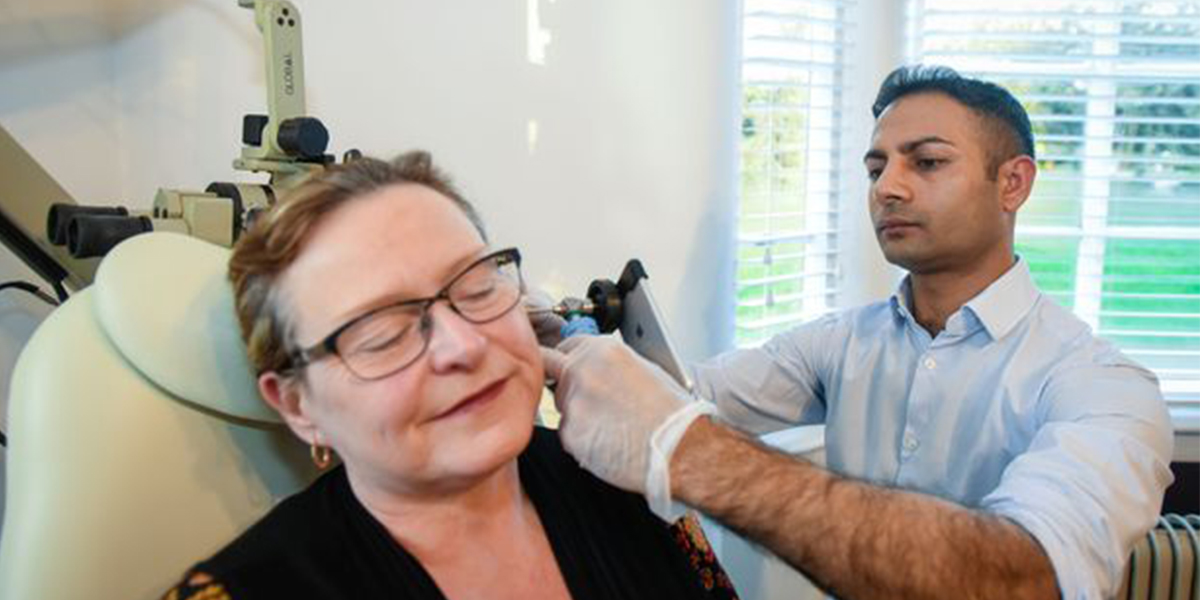
Mr Neel Raithatha performing high-definition endoscopic ear wax removal at The Hear Clinic in Leicester.
Unlike ear syringing or ear irrigation, endoscopic microsuction uses no water and does not rely on pressure washing inside the ear and use of ear drops beforehand. The continual high-definition visualisation significantly reduces the risk of infection, dizziness and eardrum injury. This makes it the safest, quickest and most controlled method of ear wax removal available.
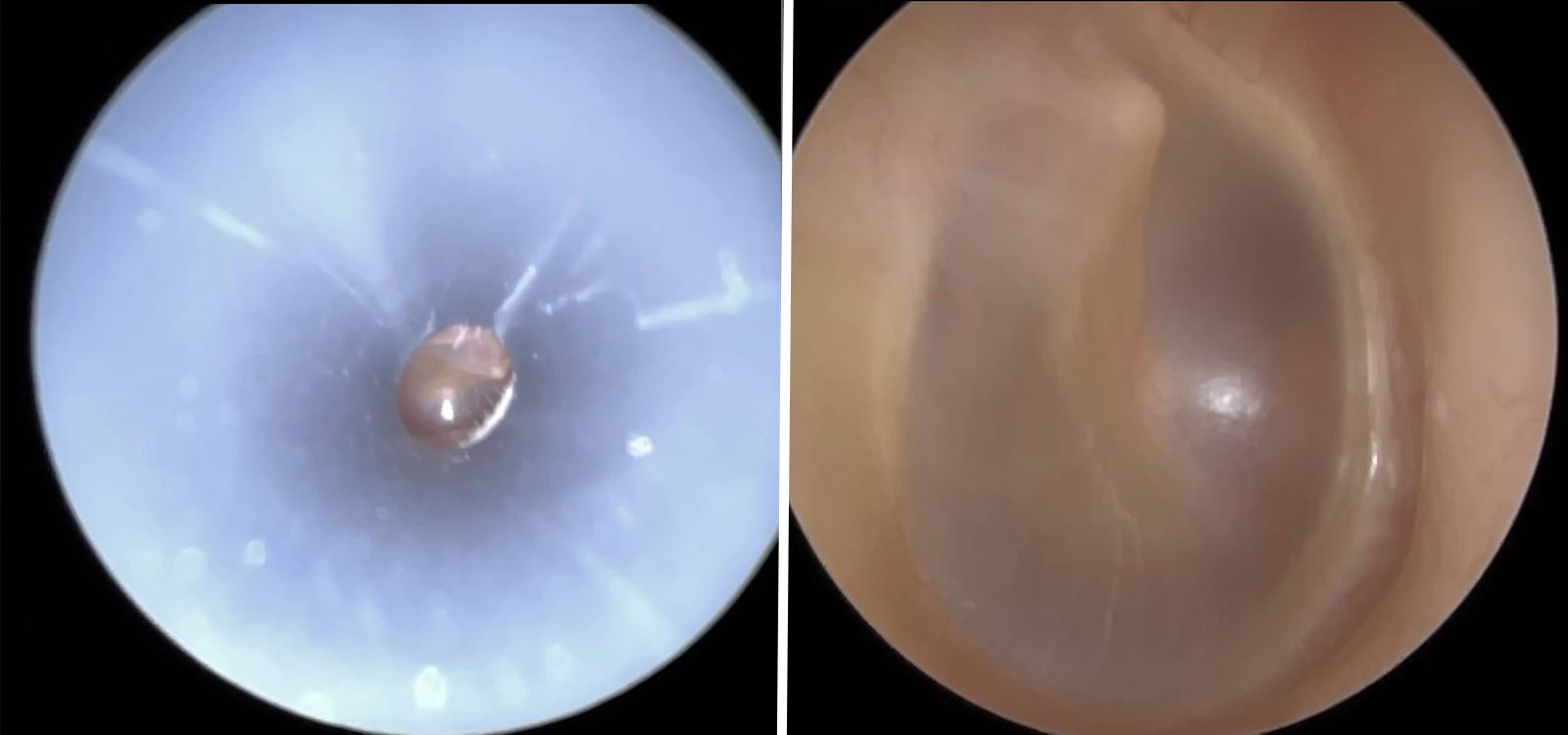
Left: Head loupes view – limited magnification with a narrow field of view.
Right: High-definition endoscopic view – a wide, crystal-clear view of the entire ear canal and eardrum, allowing precise, controlled and safe ear wax removal at The Hear Clinic in Leicester.
Since ear wax is removed under direct vision, treatment is typically completed in one short visit, usually taking 10–15 minutes per ear. Patients are able to view their ear before and after treatment on screen, providing reassurance and visual confirmation of successful ear wax removal. If you have an iPhone or iPad, we can also Air Drop video images to you.
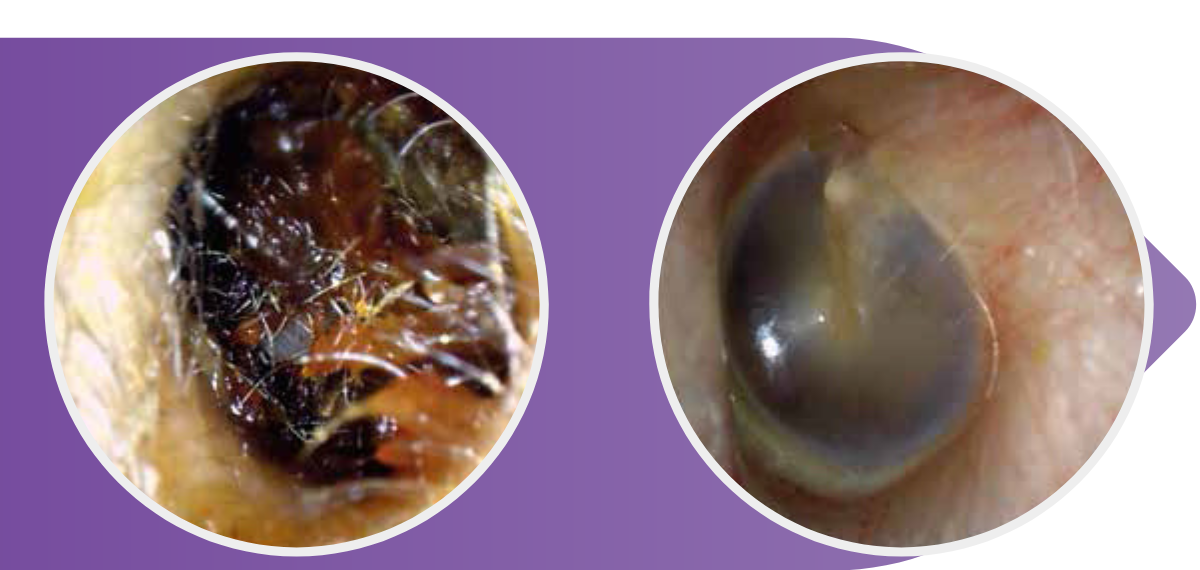
Before and after endoscopic ear wax removal under high-definition vision. The left image shows impacted wax completely blocking the ear canal. The right image shows a clear, healthy eardrum immediately after safe, water-free microsuction removal
Arrange Your Endoscopic Ear Wax Removal Appointment Today:
- The Hear Clinic, Stoughton Grange Rural Centre, Gartree Road, Oadby, Leicester, LE2 2FB
Important: Ear Wax Removal Is Not “Just Wax”
Many patients attend for ear wax removal believing their symptoms, including hearing loss, are simply due to blocked ear wax. However, during specialist examination, serious underlying ear conditions are frequently identified. These can include infections, foreign bodies, perforations of the eardrum, and more serious and potentially life-threatening conditions, such as cholesteatoma and malignant otitis externa.
At The Hear Clinic, every patient undergoes a full diagnostic ear medical history and high-definition endoscopic examination by Consultant Audiologist Mr Neel Raithatha before any ear wax is removed. This ensures that hidden pathology is identified immediately and, where necessary, urgent specialist referral is arranged without delay. In addition, Mr Neel Raithatha can also perform a full diagnostic hearing test if necessary.
This level of diagnostic safety and clinical oversight is not available in most high-street ear wax clinics and is a key reason patients choose to attend The Hear Clinic. With the current lack of regulation surrounding who can perform ear wax removal in the UK, we are unfortunately seeing an increasing number of misdiagnosed and previously unidentified pathologies in patients who have first attended other providers.
Specialist Ear Wax Removal Prices
We believe in clear, transparent pricing with no hidden fees. All ear wax removal procedures at The Hear Clinic are performed personally by our Consultant Audiologist Mr Neel Raithatha using high-definition endoscopic microsuction. Our fees include a full health examination, diagnostic medical ear history and safe, precise endoscopic ear wax removal under direct vision.
Your treatment fee includes:
- – Specialist examination of both ears
- – Detailed clinical history and assessment
- – Magnified and high-definition endoscopic visualisation
- – Advanced water-free microsuction ear wax removal
- – Before and after video viewing if desired
- – Identification of any underlying ear pathologies if present
- – Written referral to GP / ENT if required
- – Aftercare guidance post treatment
- – Procedure performed by Consultant Audiologist Mr Neel Raithatha (no technician or lay person)
Our specialist fees reflect the level of expertise, diagnostic equipment and clinical safety involved in endoscopic ear wax removal. Unlike many high-street services, treatment at The Hear Clinic includes full diagnostic assessment performed by a qualified and registered Audiologist (not a technician or lay person) to ensure hidden ear ear conditions are not missed during your ear wax removal treatment.
Frequently Asked Questions – Endoscopic Ear Wax Removal in Leicester
Yes. Endoscopic ear wax removal using high-definition microsuction is the safest method of ear wax removal available. It allows for continuous magnified and high-definition visualisation of the ear canal and eardrum during treatment, significantly reducing the risk of infection, dizziness and eardrum injury compared with traditional syringing and other low-level magnification techniques.
No. Microsuction is generally painless and very well tolerated. Some patients may notice mild noise or vibration during the procedure, but it should not be painful. If any discomfort occurs, the procedure can be paused immediately.
Yes. Endoscopic microsuction is safe for children aged 2 years and over. The magnified view allows for extremely controlled ear wax removal in young patients.
Treatment typically takes 10–15 minutes per ear, depending on the severity of ear wax build-up. Most patients only require one visit.
For adults (unless previously advised by ourselves), no ear drops are required before endoscopic microsuction ear wax removal. For children below the age of 12, we recommend using medical grade olive oil drops twice a day for 2 days before your appointment.
Yes, in some cases ear drops can help to soften and loosen ear wax, making it easier to remove naturally or by a qualified clinician. Over-the-counter ear wax drops and sprays are usually either:
-
Oil-based (such as olive oil drops or sprays), or
-
Water-based (such as sodium bicarbonate or hydrogen peroxide–based drops)
Water-based drops may be more effective at breaking down ear wax, but they are more likely to cause irritation and can sometimes lead to infection, albeit it rare. They can also cause wax to swell temporarily, which may worsen the blocked sensation before improving it. Oil-based drops tend to be gentler and better tolerated, especially in sensitive ears, and soften ear wax rather than breaking it down. Importantly, you should never used ear drops if you have a perforated eardrum, active ear infection or if you are allergic to any of the ingredients.
Ear drops should always be used at room temperature, as drops that are too cold or too warm can trigger temporary dizziness or vertigo due to stimulation of the balance organs.
After applying ear drops, the treated ear should face upwards for 5 minutes to allow the drops to penetrate the wax, before turning the ear over downward to allow it to drain with a tissue held underneath. This is usually repeated 2–3 times daily for up to 5-7 days. However, if ear wax is excessive, hard or impacted, ear drops alone often will not be sufficient, and professional removal is usually required.
At The Hear Clinic, ear drops are not routinely required before endoscopic microsuction unless you have been previously been advised by ourselves. For children below the age of 12, we recommend using medical grade olive oil drops twice a day for 2 days before your appointment.
Ear wax (cerumen) is a natural yellow-brown substance produced by glands in the skin lining the ear canal (external auditory canal). It may be either soft or hard in consistency, and the type of wax you produce is largely genetically determined.
Ear wax has several important protective functions:
-
It cleans the ear canal by trapping dead skin, dust, dirt and small foreign particles
-
It lubricates the skin of the ear canal, preventing dryness and cracking
-
It protects against infection, as it is slightly acidic and has natural antibacterial and antifungal properties
In most people, ear wax naturally migrates out of the ear canal on its own, carrying debris away with it. This happens because the skin lining the ear canal slowly moves outwards as it renews and sheds.
However, in some individuals this natural process is disrupted, and ear wax can build up and become impacted. When this occurs, it may cause symptoms such as hearing loss, blockage, tinnitus, dizziness or discomfort, and professional removal may be required.
Everyone produces ear wax, but in some people it has a tendency to accumulate and become impacted. This can happen for several reasons. Some individuals are simply genetically predisposed to producing wax at a faster rate than it can naturally migrate out of the ear.
Other common causes of ear wax build-up include:
-
The skin lining the ear canal does not migrate outwards normally
-
Naturally narrow or bendy ear canals
-
Bony growths (exostoses) within the ear canal
-
Cotton bud use, which pushes wax deeper into the ear
-
Hearing aids or earplugs, which block natural ear wax migration
-
Excess ear canal hair, which traps ear wax
-
Dry, hard wax, which is more common with increasing age
When natural clearance is disrupted, ear wax can accumulate, harden and become impacted, leading to hearing loss, a blocked sensation, tinnitus, dizziness or vertigo and discomfort.
Common symptoms include:
- Reduced hearing
- A blocked or full feeling in the ear
- Ringing in the ears (tinnitus)
- Hearing internal sounds (occlusion) and own voice (autophony)
- Dizziness and vertigo
- Earache
- Itchiness and irrigation
- Hearing aid feedback or malfunction
Yes. Impacted ear wax is a very common cause of temporary hearing loss, blocked sensation, tinnitus and ear discomfort. Once safely removed, hearing and other symptoms often improves immediately.
Yes. Most ear wax removal providers in the UK perform microsuction using head loupes, which offer only limited magnification and a narrow field of view. This can make it more difficult to perform delicate procedures safely, particularly deep in the ear canal close to the eardrum.
Endoscopic microsuction provides a significantly more magnified, wider, clearer and high-definition view of the entire ear canal and eardrum, allowing for greater precision and improved safety.
An ENT operating microscope offers significantly better magnification than commonly used head loupes. A clinical study nonetheless found that endoscopic ear wax removal is more comfortable for patients and quicker and easier to perform when directly compared with microsuction using an ENT operating microscope.
No. Ear syringing and ear irrigation uses water and pressure inside the ear canal and carries a higher risk of:
- Infection
- Dizziness
- Eardrum perforation
Microsuction under endoscopic vision is far safer and more precise.
Patients with severe tinnitus or hyperacusis (sound sensitivity) can sometimes find the noise and vibration of microsuction uncomfortable or symptom-provoking.
At The Hear Clinic, advanced endoscopic microsuction is our standard technique for ear wax removal. However, where clinically necessary and following a full diagnostic ear examination, alternative manual removal techniques may be used in selected cases to help minimise symptom exacerbation.
If manual removal is not clinically possible (for example, if ear wax is firmly impacted against the eardrum), we will advise you accordingly. In such cases, we have a full range of suction tip sizes specialised to minimise sound levels as much as possible.
Yes. At The Hear Clinic we regularly treat patients with complex ear conditions, including narrow ear canals, previous ear surgery, mastoid cavities, ear canal stenosis, perforated eardrums, recurring infections and fragile ear canals. In these cases, ear wax removal is performed using the safest and most appropriate technique following a detailed ear examination and assessment. Microsuction and/or manual removal under high-definition endoscopic vision may be used depending on the individual clinical findings.
Yes. Hearing aids can increase ear wax production and impaction by blocking natural wax migration. Regular professional ear examinations are recommended for hearing aid users.
This varies between individuals. For chronic suffers of ear wax, we recommend ear checks every 12–18 months. Some patients may require more or less frequent reviews depending on their rate of ear wax production.
Yes. You can book directly at The Hear Clinic without needing a GP referral. If an underlying medical condition is identified, a referral can be made to your GP or ENT specialist.
Specialist clinics provide a higher level of clinical safety and diagnostic oversight, including:
-
Full diagnostic ear examination and assessment
-
High-definition, magnified visualisation of the ear canal and eardrum
-
Identification of underlying ear disease
-
Medical-grade microsuction equipment
-
Treatment performed by a qualified and registered medical or healthcare professional with specialist training in audiology or ENT
In the UK, ear wax removal is currently unregulated. This means some providers may have limited training and no formal medical or healthcare background. Without appropriate diagnostic expertise, significant and potentially life-threatening ear conditions can be missed, and the risk of complications is higher. Choosing a specialist clinic ensures your ears are examined, treated and safeguarded to the highest standards.
At The Hear Clinic we provide specialist endoscopic ear wax removal in Leicester, Oadby, Wigston, Stoneygate, Knighton, Evington, Great Glen, Market Harborough and surrounding Leicestershire areas. Appointments are available for adults and children from our private clinic in Oadby.


